
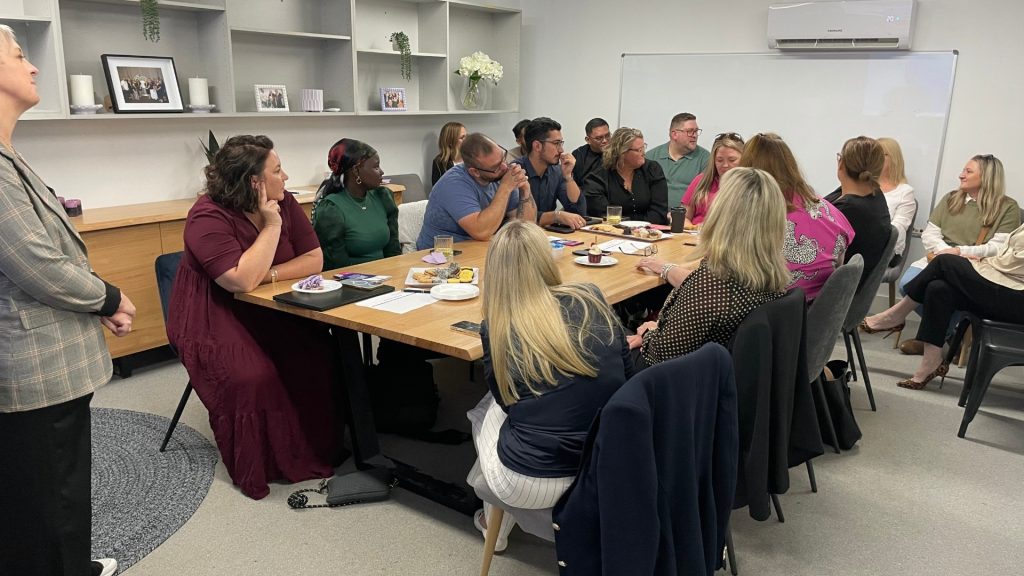
After a potential match has been identified, the journey enters one of its most critical and often unseen stages.
From the outside, it might feel like everything is ready to go.
A property has been found.
The participant can picture themselves living there.
The support team is feeling optimistic.
But behind the scenes, this is where the real coordination begins.
At this stage, Regional Tenancy Manager Jenelle steps into a role that is equal parts communicator, problem solver, and coordinator. Her focus shifts to bringing all the moving pieces together to ensure that what looks like a good match on paper can actually work in practice.
This means working closely with multiple stakeholders, including:
• The participant and their family
• Support coordinators
• Supported Independent Living (SIL) providers
• Allied health professionals
• The landlord and housing provider
• And, in many cases, the NDIA
Each of these parties plays a crucial role, and each has their own requirements, timelines, and considerations.
One of the key priorities at this stage is ensuring alignment.
Does the participant’s funding match the supports required in this home?
Is the SIL provider able to deliver the right level of care in this specific setting?
Are there any additional modifications or equipment needed before move-in?
Is the property fully ready and compliant for the participant’s needs?
These questions don’t always have immediate answers.
Sometimes, small gaps are identified that require quick problem-solving.
Other times, larger challenges arise that need careful navigation and collaboration.
This is also where communication becomes everything.
Clear, consistent updates help manage expectations and keep everyone moving in the same direction. Because while excitement is still high, this stage can also feel slow or uncertain for participants and their families.
There can be moments of:
• Waiting for approvals
• Adjusting support arrangements
• Coordinating timelines between different providers
And at times, it may feel like progress has stalled.
In reality, this is where the foundations are being laid.
Because a successful SDA move-in isn’t just about having a property available.
It’s about ensuring that every element from the home, to the supports, to the funding, and the people all work together seamlessly.
This stage is where collaboration truly comes to life.
It’s where providers lean on each other.
Where challenges are worked through together.
And where a shared goal keeps everyone focused.
Creating a home that is not only suitable, but sustainable.
Because getting this stage right makes all the difference.
It sets the tone for a successful transition, a stable tenancy, and ultimately, a better quality of life for the participant.
And while much of this work happens behind the scenes, it is one of the most important parts of the entire journey.
✨ Next in Part Eight:
What happens when everything aligns and it’s finally time to prepare for move-in day?
