
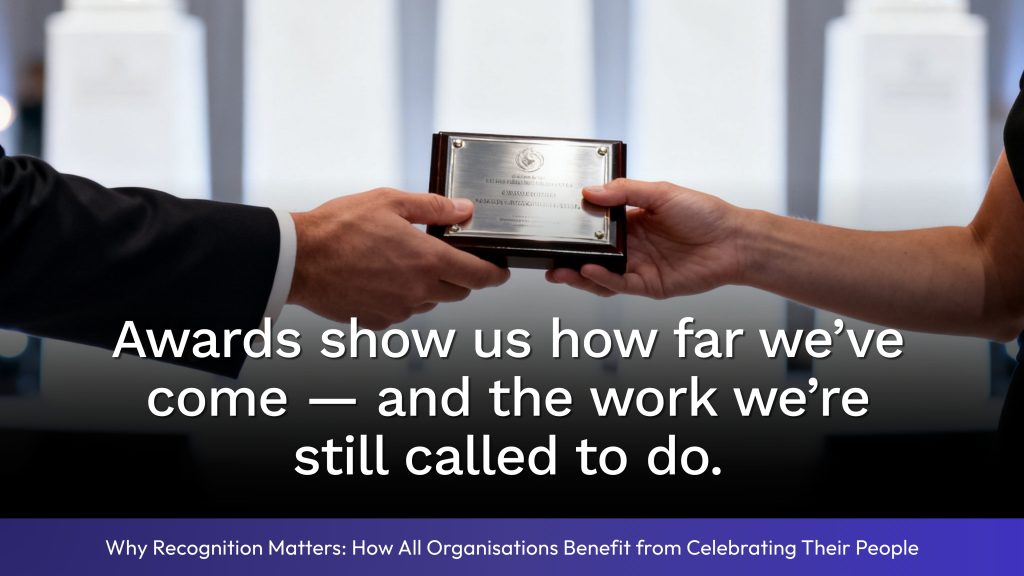
Industry conferences and awards nights have long been a fixture across many sectors, but within the NDIS landscape their role extends far beyond formality. Recognition – both internal and external – has a measurable impact on culture, innovation, workforce wellbeing, and sector-wide progress. Events such as One Community’s Australian Disability Service Awards (ADSA) offer an important lens into why celebrating achievements is not only worthwhile but essential.
Celebrating innovation – whether in assistive technology, service delivery, or participant outcomes – fuels industry progress. When teams see what their peers are achieving, it inspires a collective drive to raise the bar.
Awards ceremonies showcase:
• new technologies transforming independence
• contemporary approaches to support delivery
• projects improving accessibility and inclusion
• initiatives creating better pathways into employment
This visibility spurs providers to explore new opportunities, challenge outdated practices, and refine their own services. Recognition becomes the mechanism through which the sector continually evolves to better support people with disabilities.
Internal recognition within organisations plays an equally crucial role. In human services – where work is demanding, emotionally complex, and deeply relational, acknowledging staff contributions is essential for sustaining a healthy workforce.
Effective recognition:
• reduces burnout
• boosts morale and motivation
• improves retention
• promotes teamwork
• reinforces organisational values
• validates the impact of frontline and behind-the-scenes work
When staff feel seen and appreciated, the quality of service delivery naturally strengthens. Participants benefit, organisations benefit, and the entire sector benefits.
In the NDIS sector, sector-wide events also serve to amplify the voices and leadership of people with disabilities. This visibility fosters cultural change – both within the sector and in broader society.
Awards serve as markers of how far the sector has come while revealing the work still ahead. They highlight successes, reinforce excellence, and celebrate innovation, but they also expose ongoing challenges such as employment inequity, funding pressures, and systemic barriers.
This balance of celebration and reflection ensures that recognition remains purposeful. It reminds organisations why their work matters and motivates continued improvement.
Although this reflection sits within the NDIS context, the underlying principles apply to all industries. Recognition strengthens culture, enhances performance, encourages innovation, and improves retention. Most importantly, it reinforces purpose.
Whether internal or external, recognition is not merely ceremonial – it is a strategic investment in people, progress, and the future of the sector.
