
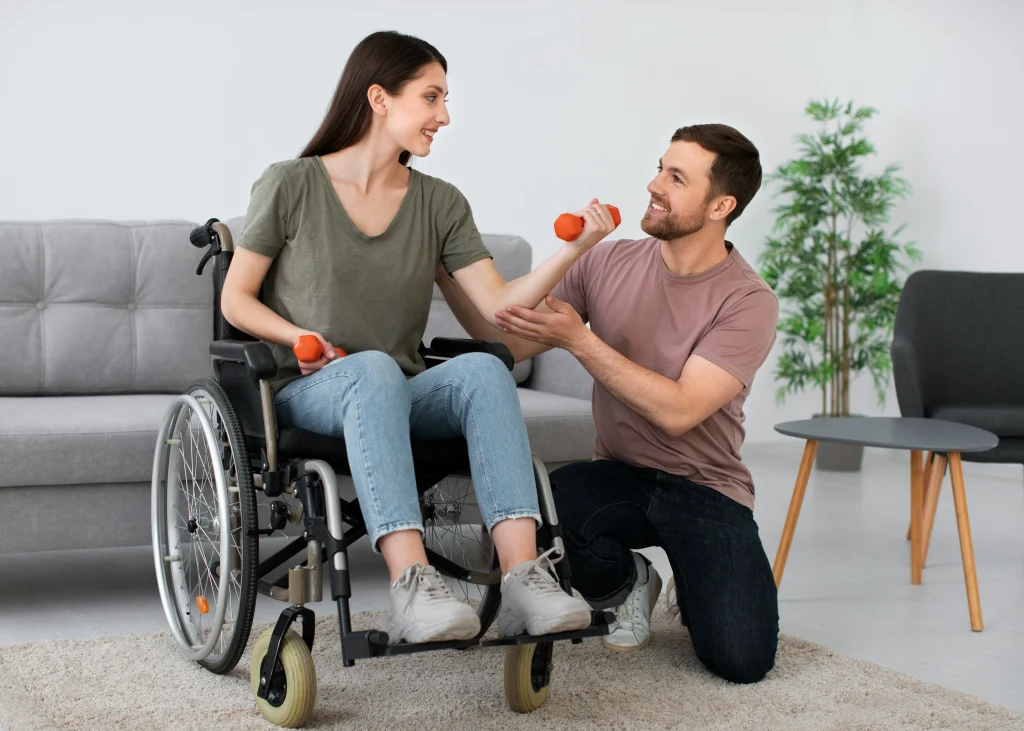
Choosing accessible housing for individuals with high physical support needs requires more than simply checking if a property is “wheelchair-friendly.” True accessibility goes beyond surface-level modifications. It demands thoughtful design, structural planning, and long-term adaptability.
Whether you are a participant, family member, caregiver, housing provider, or investor, understanding the essential features of high-support accessible housing is critical to ensuring safety, dignity, and independence.
-
Step-Free Access Throughout the Property
A genuinely accessible home begins at the entrance.
Look for:
- Zero-step entry points
- Wide, gently graded ramps if elevation is unavoidable
- Flush thresholds between rooms
- Smooth, non-slip flooring
Even minor level changes can become significant barriers for wheelchair users or individuals with limited mobility. Continuous, unobstructed movement throughout the home reduces reliance on support staff and minimizes fall risks.
-
Generous Circulation Space
For high physical support needs, space is not a luxury — it is essential.
Minimum considerations:
- 900mm–1000mm doorway clearance
- Wide hallways (ideally 1200mm+)
- Turning circles (at least 1500mm diameter) in key rooms
Adequate circulation allows:
- Safe wheelchair maneuvering
- Space for hoists or mobility equipment
- Room for support workers to assist when required
Cramped layouts can compromise both safety and comfort.
-
Accessible Bathroom With Full Transfer Support
Bathrooms are among the most important areas to evaluate.
Key elements include:
Roll-In Shower
- No raised lip
- Slip-resistant tiles
- Fold-down or built-in shower seating
Reinforced Grab Rails
- Installed around toilet and shower areas
- Professionally secured into reinforced walls
Transfer Space Beside Toilet
- Adequate side clearance
- Adjustable-height toilet if possible
For individuals requiring full physical assistance, ceiling hoist compatibility or pre-installed support tracks can significantly enhance safety.
-
Adjustable and Reachable Kitchen Design
An accessible kitchen should support independent participation in daily activities.
Look for:
- Height-adjustable countertops
- Open knee space under sinks and benches
- Side-opening ovens
- Induction cooktops with front controls
- Pull-down shelving systems
Accessible kitchens reduce dependence and improve quality of life through everyday engagement in meal preparation.
-
Structural Reinforcement for Equipment
Many high-support needs require assistive equipment such as:
- Ceiling hoists
- Transfer systems
- Adjustable hospital-style beds
Walls and ceilings must be reinforced during construction to safely accommodate such equipment. Retrofitting later can be costly and disruptive.
Planning for equipment integration at the design stage demonstrates a commitment to long-term usability.
-
Smart Home Integration for Environmental Control
Technology can significantly increase independence.
Consider homes equipped with:
- Voice-activated lighting
- Automated doors
- Remote-controlled blinds
- App-based temperature regulation
- Emergency alert systems
For individuals with limited upper-body mobility, environmental control systems reduce daily physical strain and enhance autonomy.
-
Bedroom Design That Supports Care
A high-support accessible bedroom should allow:
- Clear space on at least two sides of the bed
- Space for hoist transfers
- Accessible storage at reachable heights
- Easy access to ensuite facilities
The layout should accommodate both independence and caregiver assistance without feeling clinical or restrictive.
-
Lighting, Acoustics, and Sensory Comfort
Accessibility includes environmental comfort.
Look for:
- Even, glare-free lighting
- Contrasting finishes to define edges and pathways
- Acoustic insulation for reduced noise stress
- Easy-to-operate switches positioned at accessible heights
Small design choices greatly influence safety and emotional wellbeing.
-
Safety and Emergency Readiness
High-support housing must include:
- Accessible emergency exits
- Visual and audible alarm systems
- Backup power supply for essential equipment
- Clear evacuation planning
Emergency preparedness is especially critical where mobility limitations are involved.
-
Future-Proof and Flexible Design
Needs may change over time. The most effective accessible housing incorporates:
- Modular fittings
- Adjustable-height features
- Extra structural capacity for additional equipment
- Adaptable room layouts
Future-proofing protects both residents and families from costly renovations later.
Final Thoughts
Accessible housing for high physical support needs must prioritize safety, independence, dignity, and adaptability. It is not about minimal compliance — it is about thoughtful, human-centered design.
When these features are incorporated correctly, housing becomes more than shelter. It becomes a supportive environment that empowers individuals to live with greater autonomy and confidence.
